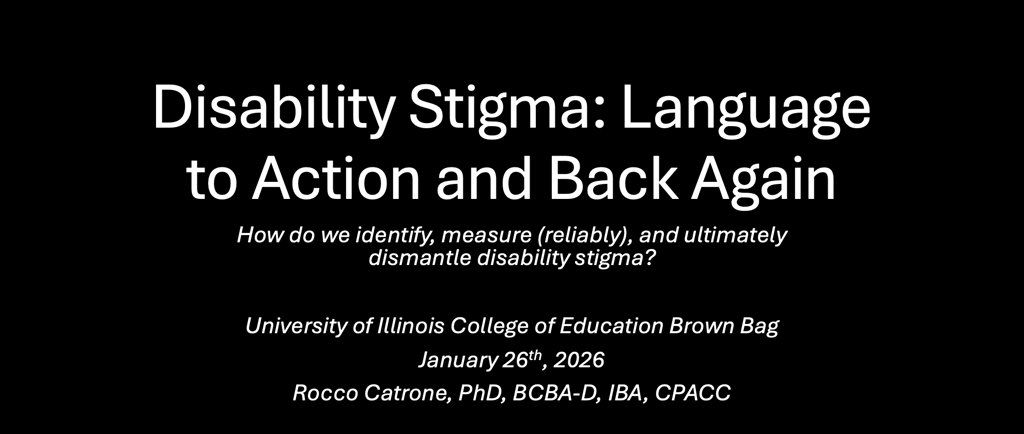
Disability stigma is sticky because it operates through language — and behavior science gives us tools to see exactly how it forms, measure it reliably, and intervene. This brown bag walks through three models of disability (medical, sociopolitical, and DisCrit — Disability Critical Race Theory) and grounds them in a Relational Frame Theory (RFT) conceptualization of how words like incapable, atypical, and impaired form derived networks that drive stigma behavior (Catrone & Koch, 2021). From theory we move to measurement: the General Capability Scale (GCS) and a series of in-prep replications and extensions (Adair, Catrone, & Valesey; Park, Catrone, & Nguyen; Pawar & Catrone) that are producing significant pre-post effects with medium-to-large effect sizes. From measurement we move to reduction — a caregiver-training model integrating Acceptance and Commitment Therapy (ACT, a behavioral approach focused on psychological flexibility) with Behavioral Skills Training (BST), built so parents aren't "fixed" but equipped to navigate broken systems. The last segment is yours: this is a brown bag, so I'm asking you to push back, name my blind spots, and tell me where the work could go next.
Location: University of Illinois College of Education Brown Bag · January 26, 2026
Session materials: https://drive.google.com/drive/folders/1YnAz7Nw50AuIO5LMy7K2WfkUY5Ylu_ag?usp=sharing